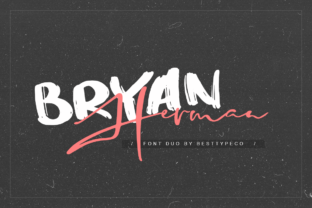
Bryan Herman: A Handmade Calligraphy Font for Creative Projects
Bryan Herman is a fresh, handmade calligraphy font that brings a personal touch to any design. Its unique character and elegant style make it ideal for a wide range of creative applications, from greeting cards to branding materials. Whether you're a designer, entrepreneur, or hobbyist, Bryan Herman offers a versatile solution that adds warmth and authenticity to your work.
What Makes Bryan Herman Stand Out?
Bryan Herman has a distinct visual personality that blends traditional calligraphy with modern design sensibilities. The font features fluid lines, subtle variations in stroke weight, and a slightly irregular shape that mimics real hand-lettering. This handmade quality gives it a warm, approachable feel that sets it apart from more rigid, digital fonts.
Its design is best described as a script font with a serif influence, making it both expressive and readable. While it’s not a sans serif font, its organic structure allows it to work well in both print and digital formats. The font’s personality is friendly yet professional, making it suitable for everything from casual invitations to formal brand identities.
Where Bryan Herman Shines
Bryan Herman excels in projects that benefit from a human touch. It’s particularly effective in logo design, where its unique character can help create a memorable brand identity. For editorial design, the font adds a refined, artistic flair to headlines, captions, and quotes. In packaging design, it can give products a custom, artisanal feel that stands out on shelves.
For web design and social media graphics, Bryan Herman works well as a display font, drawing attention without overwhelming the reader. It’s also a great choice for business cards, wedding invitations, and other printed materials that require a personal, handwritten aesthetic. When used thoughtfully, Bryan Herman can elevate the overall look and feel of any project.
How Bryan Herman Influences Design and Perception
The right font can significantly impact how a design is perceived. Bryan Herman, with its soft curves and natural flow, can create a sense of warmth and approachability. This makes it an excellent choice for brands that want to convey trust, creativity, or craftsmanship.
In terms of readability, Bryan Herman performs well at larger sizes, such as headings and titles. However, it’s not recommended for body text due to its intricate details, which can become difficult to read when scaled down. Designers should consider this when integrating the font into layouts, ensuring it complements other typefaces and doesn’t compromise legibility.
When used consistently across marketing materials, Bryan Herman can reinforce brand recognition. Its distinctive style helps create a cohesive visual language that resonates with audiences. This consistency is key to building a strong brand identity, especially in competitive markets where differentiation matters.
Choosing the Right Font for Your Project
Before using Bryan Herman, it’s important to evaluate how well it fits your specific needs. Consider the tone of your project—does it require a formal, playful, or artistic vibe? Bryan Herman leans toward the artistic and personal side, so it may not be the best fit for highly technical or corporate designs.
Testing font pairings is another crucial step. Pairing Bryan Herman with a clean, modern sans serif can create a balanced contrast that enhances readability while maintaining visual interest. For example, using it as a headline with a simple serif or sans serif for body text can result in a polished, professional look.
Reviewing the font’s available styles is also essential. Some handmade fonts come in multiple weights or variations, offering more flexibility. Make sure to check what options are included before finalizing your design. Additionally, consider the commercial licensing terms if you plan to use Bryan Herman in paid projects or client work.
Practical Tips for Using Bryan Herman
If you’re new to using handmade fonts, start by experimenting with small elements like headlines or logos. This allows you to get a feel for the font’s strengths and limitations without overcommitting. Once you’re comfortable, you can expand its use to more prominent areas of your design.
For print projects, ensure that the font is properly embedded and that high-resolution versions are used to maintain clarity. In digital contexts, test the font on different devices and screen sizes to confirm it looks good across platforms. Always prioritize readability, even if the font is visually appealing.
Finally, don’t be afraid to seek inspiration from other designers who have successfully used Bryan Herman. Observing how others integrate the font into their work can provide valuable insights and help you make more informed design decisions.